4 interessanti tendenze immobiliari individuate al PROVADA
La settimana scorsa ho partecipato a PROVADA, un interessante evento di networking e condivisione di conoscenze per il settore immobiliare. Il tema di quest'anno era "Agisci ora per un domani migliore" e questo si rifletteva nel programma. Naturalmente c'è molto da vedere e da imparare a PROVADA, ma vorrei condividere con voi quattro tendenze particolari che ho notato durante la fiera.

1. Sostenibilità, ma applicabile La sostenibilitàè da anni un tema importanteper il settore immobiliare, ma secondo me solo negli ultimi anni è diventata davvero prioritaria. Dopo il Covid e l'aumento dei prezzi dell'energia dovuto alla carenza di gas, è chiaro che il "futuro migliore" che PROVADA mette in agenda deve essere realizzato già oggi. Come forse sapete, il settore immobiliare è responsabile del 40% di tutte le emissioni e deve muoversi per raggiungere gli obiettivi dell'accordo di Parigi sul clima. Molti stand della fiera dedicavano una sezione speciale alla loro storia di sostenibilità e a come riducono l'impatto ambientale e la loro impronta di carbonio. E non solo la filosofia, ma soprattutto l'attuazione pratica. Come si possono rendere gli edifici più sostenibili? Quali impianti esistono per l'edilizia residenziale con approvvigionamento idrico? Anche le cucine di tutti i giorni devono adeguarsi. L'ambizione non è più sufficiente, bisogna anche essere in grado di metterla in pratica. Sempre più aziende stanno finalmente dando seguito a questo obiettivo. hello energy lavoriamo con il nostro software alla visibilità della sostenibilità all'interno degli edifici (uffici) e coinvolgiamo tutti nel processo. Mostriamo come i visitatori e gli inquilini degli edifici possano avere un impatto diretto e risparmiare energia insieme. Lo facciamo con visualizzazioni accattivanti, contenuti stimolanti e approfondimenti utili che li incoraggiano a cambiare il loro comportamento.

2. Il "carbonio incorporato" o "retrofitting" sta ricevendo sempre più attenzione.Mentre prima la consegna di un nuovo edificio era considerata un fiore all'occhiello, ora prevalgono le soluzioni circolari. Il "retrofitting", ovvero l'adeguamento degli edifici esistenti secondo i più recenti standard di sostenibilità, sembra ora essere sempre più spesso la prima scelta per lo sviluppo immobiliare.Nel programma sono state menzionate certificazioni sostenibili come BREEAM, WELL e GRESB, e BREEAM-in-use (per edifici già in uso) sembra guadagnare terreno. Interessanti sono, ad esempio, i progetti di Respace, dove con una sorta di soluzione prefabbricata in legno è possibile ristrutturare anche edifici storici in modo più sostenibile, economico e spesso meno invasivo. Oppure il progetto di Urban Climate Architects, in cui viene progettato un edificio di 10 piani con una struttura interamente in legno. Il "carbonio incorporato", ovvero la quantità di carbonio rilasciata nel processo di produzione di un edificio, può essere notevolmente ridotto utilizzando solo cemento locale o solo costruzioni in legno.La combinazione di biobased, circolare, retrofitting, materiali locali e prefabbricati sono solo alcuni esempi dei molti sviluppi interessanti che ho visto durante l'evento.3. L'edilizia alternativa è il nuovo adagio L'immobiliaretradizionale si basa su uno scopo d'uso esistente, ovvero "purpose-built real estate". Se la crisi Covid ci ha insegnato qualcosa, è che l'uso degli edifici e degli uffici può cambiare rapidamente. Sempre più portafogli immobiliari stanno quindi assumendo un carattere più flessibile, al fine di rendere i loro investimenti più resistenti al futuro e prepararli per un uso alternativo, qualora fosse necessario in futuro.Basta fare una rapida ricerca su Google con le parole "non traditional asset classes" per rendersi conto che questo potrebbe essere il futuro del settore immobiliare. Si legga ad esempio "flexibel bouwen is essentieel voor duurzaambouwen"(la flessibilità è essenziale per l'edilizia sostenibile), "flexibel bouwen is toekomstbestendig"(la flessibilità è a prova di futuro) o l'articolo di Savills in cui si parla dell'ascesa del leasing flessibile.4. Proptech e digital twins Ancheil software innovativo e la proptech (property technology) non potevano mancare quest'anno. Un bell'esempio di innovazione l'ho trovato in Aeroscan, che aiuta a registrare gli immobili in modo completamente digitale con droni e software 3D. Questo contribuisce naturalmente alla creazione di un cosiddetto "digital twin", una copia digitale del vostro edificio che vi permette di raccogliere sempre più informazioni sul vostro immobile (portafoglio) e di prendere decisioni migliori basate sui dati in tempo reale. Perché, lo sappiamo tutti, twinning is winning!Soprattutto, ho trovato PROVADA ancora una volta un luogo stimolante dove innovazione, tecnologia, sostenibilità e immobili si incontrano in modo divertente. Ho avuto conversazioni interessanti, ho visto nuovi concetti e idee interessanti e ho potuto farmi un'idea chiara di ciò che sta facendo il settore immobiliare. Se non c'eri, ti consiglio vivamente di partecipare alla prossima edizione. Spero di incontrarti lì il prossimo anno!
Machine design changes, new materials and efficient lubricants could reduce energy losses by 18–40%, mainly resulting from friction and wear. The savings would be up to 8.7% of the total global energy use.
Tenant
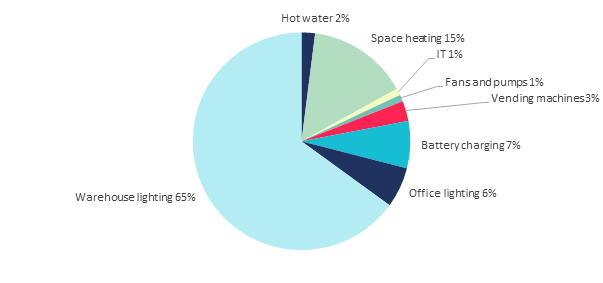
La bolletta energetica è a tuo carico. Quindi, per te, è fondamentale capire bene cosa c'è scritto. Il consumo energetico medio di una società di distribuzione è il seguente:

Some of the tips we’ll introduce below, you can implement today. For others, you might want to cooperate with your landlord or the asset manager.
4. You can also place timers or sensors so that machines, lighting and heating automatically switching off, or remind staff to switch off machines, lights and heating for the night and weekend. Did you already know about daylight sensors? When enough natural light flows into a space, these make sure that your artificial lighting is turned low or off.
5. Understand your energy usage and make all employees aware of it too. For example, by using the energy engagement software of hello energy (yes, we’re advertising a little bit for ourselves here). You can also use power monitoring devices to measure, track and visualize energy use throughout your facility real-time. Analyze the data well to make it meaningful and actionable.
6. When cranes and lifts (often used in automated warehouses) break or move down, energy is released. This energy can be captured, just as a car battery loads when breaking of driving downhill. Because the downward motion in warehouses is often done with more weight than the upward motion, an energy saving of 20% can be realized.
7. Reduce conveyor speed during low-throughput periods.
Building owner (landlord or asset manager)
The difficulty of energy saving for landlord and asset managers, is that the fruits of your investments are reaped by the tenant. Luckily, we have some solutions for that. First, let’s see what you can do to make your buildings more energy efficient.
8. Switch from inefficient lighting to 150W LED. This can reduce the electricity use (and your tenant's bill) by 70 percent! Small investment, huge result.
9. Due to the size of distribution centers and warehouses (and their roofs), solar panels are often a great idea. With current electricity prices going through the roof (pun intended), and solar panels being pretty efficient, the payback period has hugely shortened. You could have your tenant pay per kwh for the energy you provide, so you earn back your investment.
10. Whereas warehouses can often do without heating, offices, canteens, toilets and other small rooms need to be heated. Insulation greatly helps. If you’re renovating or extending your warehouse space, this is a good moment to improve insulation. Especially focus on the most common places of heat loss (see figure below).
11. As you can see in the chart below, it probably pays off if you check your warehouse for air leakage. Walk around with a laser gun on a cold day to easily spot these leakages. It’s actually pretty fun to do too.
12. Install integrated energy management controls. When renewable energy makes up increasingly large shares, predicting supply and demand becomes more important. Energy management controls help you optimize the allocation of available energy budgets to different processes. For example, when supply is low, it will delay the automated pick-up of a number of orders for a few seconds, in order to avoid peak demand.

All together
As mentioned earlier, when it comes to saving energy, there are split incentives between building user, tenant, landlord and asset manager. To overcome this barrier, engage in conversation with each other in order to find common motivators. You all want a brighter future for next generations, right?
There are also ways to more evenly distribute monetary costs and benefits. Look into green leases together, have your tenants pay per unit of energy used from the solar panels you installed or share the energy expenses saved after installing better insulation.
Also, engage in energy management together. With the insights of hello energy into a building’s energy use, this becomes much easier. This is step one into resolving barriers that split incentives pose to sustainability programs or energy efficiency programs.
Hope this helps. Let’s beat the bill!